This article introduces ASIX AX99100A and AX78140/AX78120 I/O bridge controllers with RS-232/RS-485 UART transceivers, enabling flexible PCIe and USB 2.0 I/O expansion for smart manufacturing applications.
Enabling Smart Manufacturing Upgrades with ASIX I/O Bridging Technology
1. Introduction
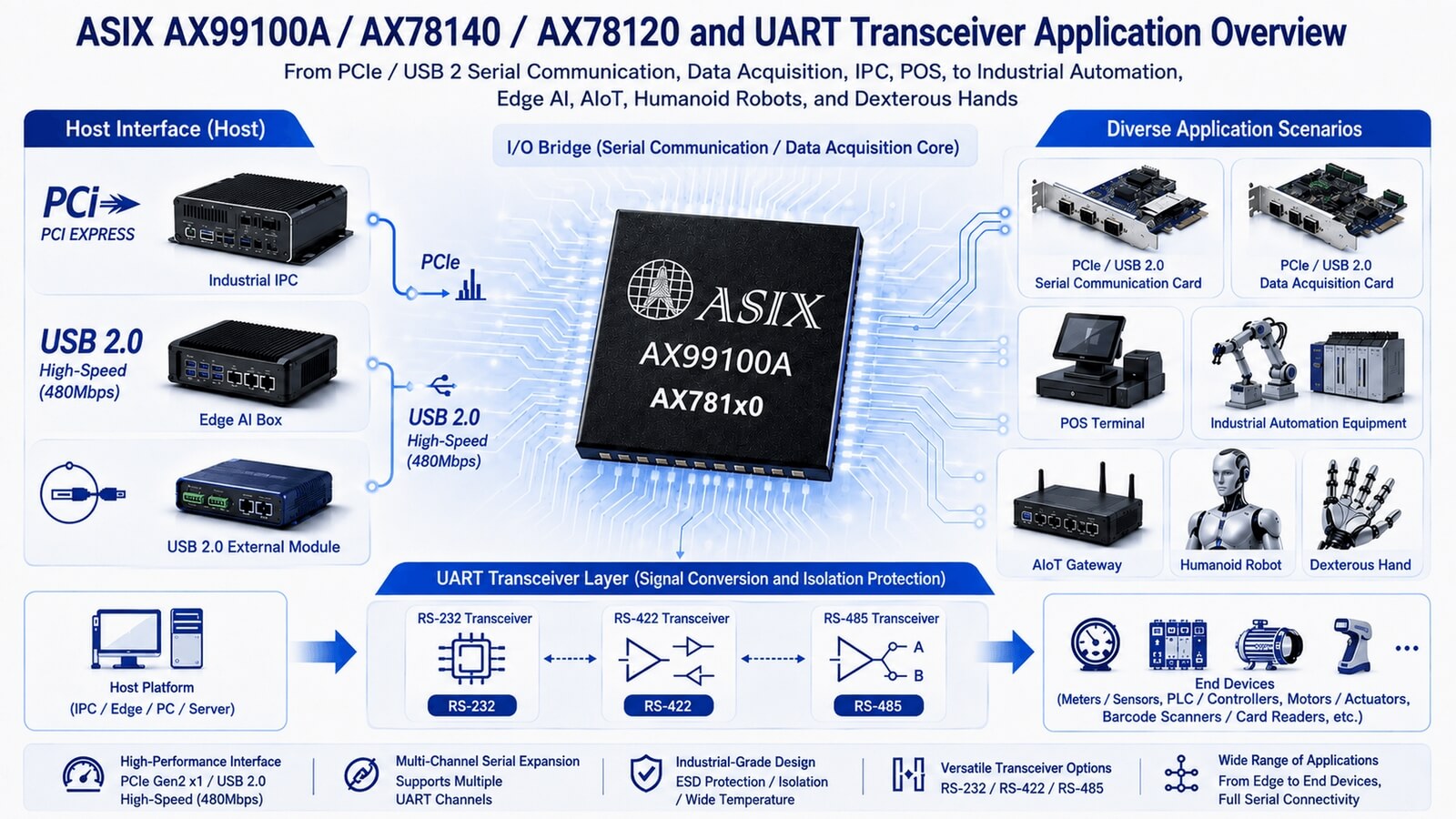
Figure-1. ASIX PCIe & USB 2.0 Multifunction I/O Bridging Solutions
With the rapid growth of generative AI, machine vision, smart manufacturing, edge computing, and humanoid robotics, modern platforms increasingly integrate multicore CPUs, GPUs, NPUs, and high speed interfaces such as PCIe, USB, and Ethernet. Despite these advances, many systems still need to connect to multiple sensors, microcontrollers, and peripheral devices, while native UART, SPI, CAN FD, and other I/O channels often remain limited—making PCIe and USB 2.0 expansion essential for extending serial, parallel, and other I/O interfaces. At the same time, a wide range of industrial and commercial equipment continues to rely on mature standards such as UART, RS-232, RS-422, RS-485, and parallel ports. Devices including sensors, motor drives, barcode scanners, receipt printers, PLCs, and power systems cannot connect directly to PCIe or USB hosts, underscoring the importance of I/O bridge controllers in linking legacy equipment with modern AI, edge computing, and industrial automation platforms.
This article introduces ASIX AX99100A PCIe multifunction I/O bridge controller, AX78140/AX78120 USB 2.0 I/O bridge controllers, and ASIX RS-232/RS-485 UART transceivers. It explores their application architectures, design considerations, and selection guidelines across smart manufacturing applications, including PCIe/USB communication cards, data acquisition (DAQ) equipment, industrial PCs, edge AI systems, POS terminals, and humanoid robots.
2. From Host Bus to Serial Interfaces: I/O Bridges and UART Architecture
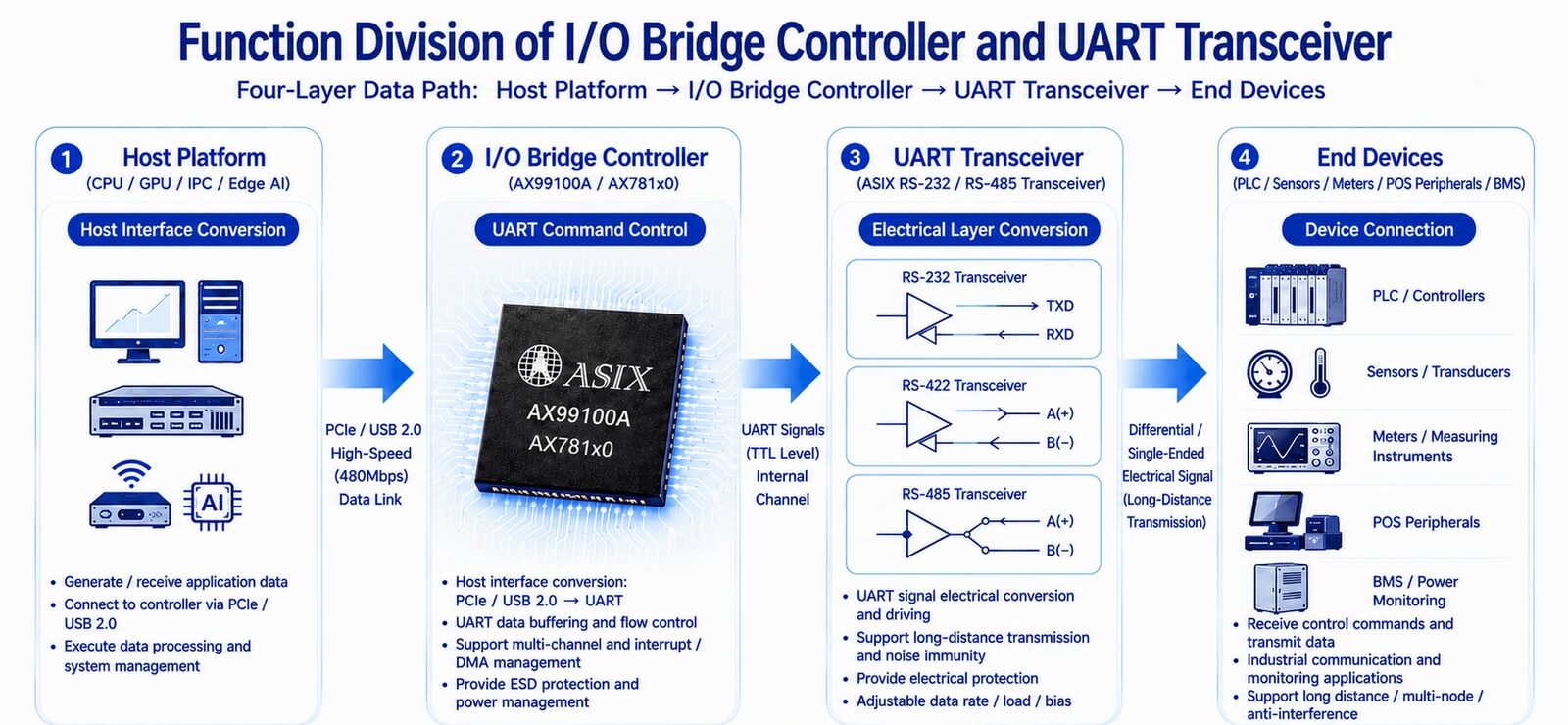
Figure-2. From Host Bus to Serial Interfaces: I/O Bridge and UART Architecture
PCIe and USB multifunction I/O bridge controllers enable PCs, industrial computers, and embedded platforms to expand multiple UART ports, parallel ports (LPT), SPI, Local Bus, and GPIO interfaces. Once recognized by the operating system and drivers, these ports appear as COM ports, TTY devices, or other I/O resources accessible to applications. Beyond interface conversion, the bridge controller also handles buffering, interrupts, and data transfers, serving as a critical link between the host bus and low speed peripherals.
The integrated UART converts host data into asynchronous serial data. During transmission, it adds start, data, parity, and stop bits, sending them at the configured baud rate; during reception, it decodes the serial frame back into host readable data. Standard UART features include programmable baud rates, TX/RX FIFOs, flow control, interrupt management, multi drop communication, RS-485 direction control, and error detection.
It is important to note that UART outputs CMOS/TTL logic signals rather than RS-232, RS-422, or RS-485 electrical levels. External UART transceivers are therefore required for physical layer conversion. RS-232 transceivers provide single ended signaling, while RS-422/RS-485 transceivers use differential signaling to improve noise immunity, extend transmission distance, and support multi node communication.
3. AX99100A: PCIe Multifunction I/O Bridging and Expansion
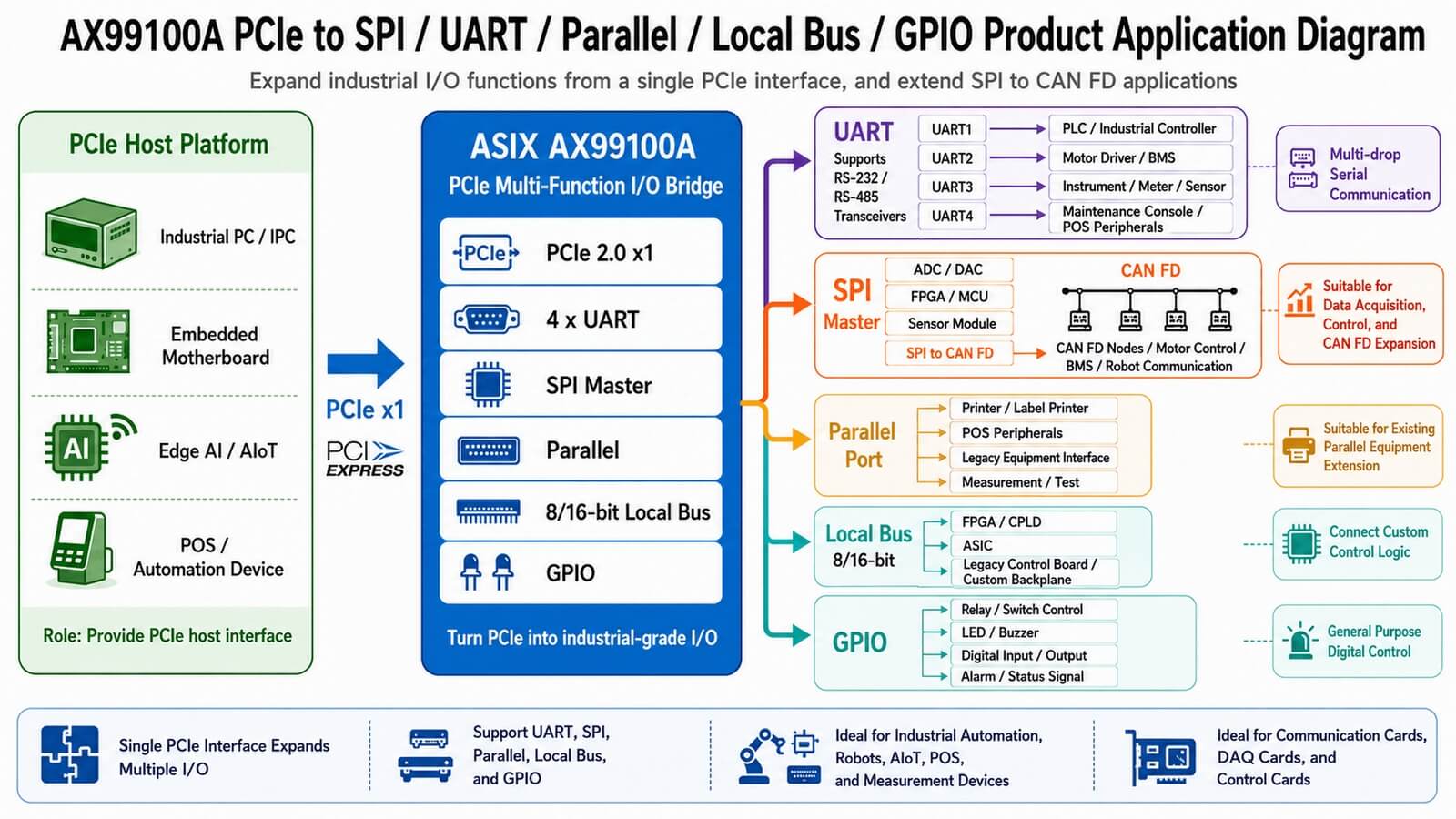
Figure-3. ASIX AX99100A PCIe Multifunction I/O Bridging Solution
The AX99100A is a PCIe multifunction I/O bridge controller that integrates a PCIe x1 Endpoint Controller and PHY, enabling the host interface to expand into multiple peripherals including up to four high speed UARTs, a parallel port, an SPI Master, an ISA like Local Bus, and GPIO.
The AX99100A supports four primary operating modes: 4S (four UARTs), 2S+1P (two UARTs plus one parallel port), 2S+SPI (two UARTs plus SPI Master), and Local Bus mode. Its flexible configuration makes it well suited for PCIe serial/parallel communication cards, PCIe data acquisition (DAQ) cards, industrial computers, industrial automation equipment, measurement instrumentation equipment, medical devices, POS terminals, edge AI platforms, robotics and industrial embedded systems. By bridging PCIe with diverse peripheral interfaces, the AX99100A helps modern platforms integrate legacy devices while enhancing scalability and compatibility.
(1) 4S Mode: PCIe to Four Serial/UART Ports
In 4S mode, the AX99100A expands a PCIe host into four UART ports. Each port can be paired with RS-232, RS-422, or RS-485 transceivers, allowing mixed configurations such as two RS-232 ports and two RS-485 ports. This mode is ideal for IPC expansion cards, industrial communication cards, and equipment management systems.
(2) 2S+1P Mode: PCIe to Two Serial/UARTs + Parallel Port
This mode provides two UART ports and one parallel port, making it suitable for systems that still require legacy printers, ticketing devices, test instruments, or other LPT peripherals. It helps preserve existing hardware and software when migrating older platforms to PCIe.
(3) 2S+SPI Mode: PCIe to Two Serial/UARTs + SPI Master
This mode combines two UART ports with a high speed SPI Master. The UARTs can connect to controllers, instruments, or RS-485 devices, while SPI can interface with ADCs, DACs, sensors, FPGAs, MCUs, or external CAN FD controllers. With a programmable SPI clock up to 41.6 MHz, the AX99100A is well suited for applications requiring integrated data acquisition, control, and communication.
(4) Local Bus Mode: Connecting FPGA, ASIC, and Legacy ISA-Like Buses
The AX99100A also supports an ISA like Local Bus for connecting FPGAs, CPLDs, custom ASICs, or legacy parallel bus circuits. This mode is particularly useful for upgrading older systems while retaining existing FPGA or ASIC designs.
For multi UART applications, designers should also consider FIFO depth, DMA support, CPU interrupt load, driver efficiency, and simultaneous multi port traffic. Each AX99100A UART includes independent TX/RX FIFOs and supports programmable baud rates up to 25 Mbps. Actual RS-232/RS-485 performance, however, depends on factors such as the transceiver, isolation, PCB layout, cabling, termination, node count, and EMI environment.
4. AX78140/AX78120: USB 2.0 Serial and Parallel Port Expansion
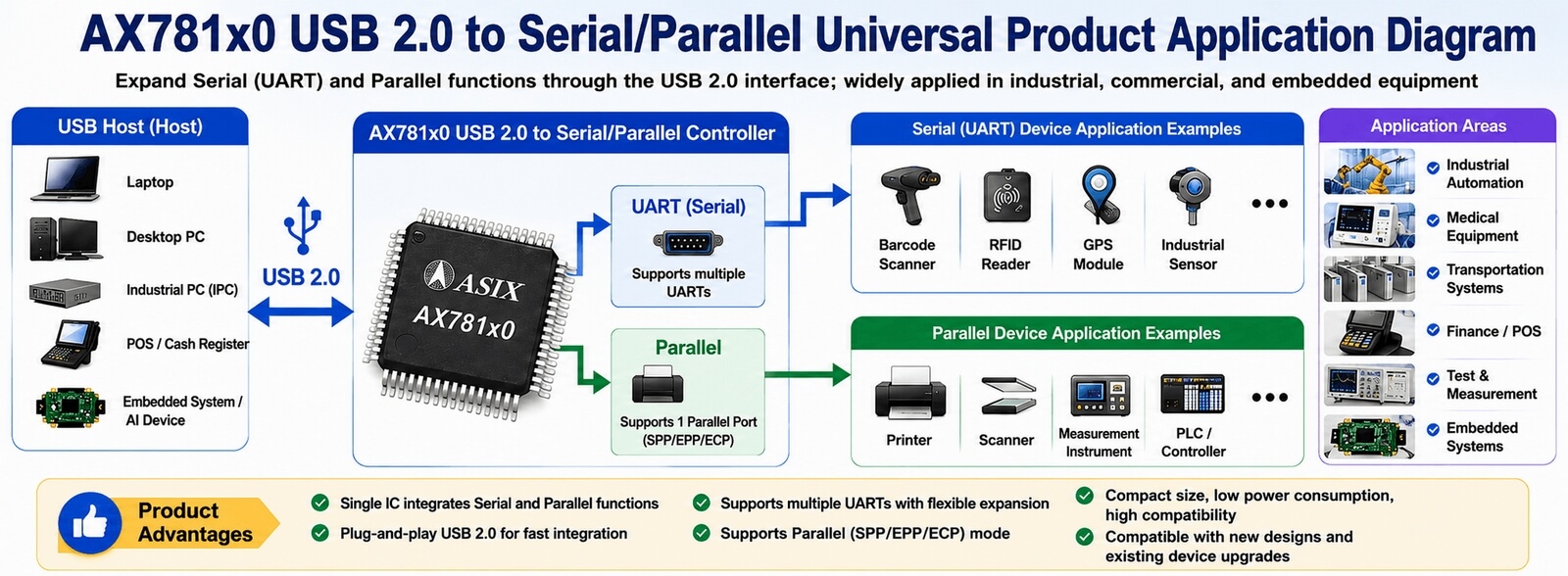
Figure-4. AX78140/AX78120 USB 2.0 Serial/Parallel Bridging Solutions
For laptops, panel PCs, compact industrial PCs, single board computers, and edge AI systems without available PCIe slots, USB 2.0 offers a flexible way to expand low speed I/O. These USB bridge solutions are ideal for USB to UART/RS-232/RS-422/RS-485 serial converters, USB parallel (LPT) printer adapters, USB Data Acquisition (DAQ) modules, industrial computers, automation systems, measurement instruments, medical devices, and POS terminals.
(1) AX78140: USB 2.0 Four Serial/UARTs and Parallel Port Bridge
The AX78140 integrates a USB 2.0 controller and PHY, supporting up to four high speed UARTs and one parallel port. It offers two modes: 4S (four UARTs) and 2S+1P (two UARTs plus one parallel port). This makes it suitable for USB serial/parallel cards, DAQ systems, industrial PCs, automation equipment, test instruments, medical devices, and POS systems.
The AX78140 supports automatic UART direction control, hardware/software flow control, and multi port buffering, with UART speeds up to 6 Mbps. In 4S mode, a single USB 2.0 interface can expand to four UARTs, enabling connections to PLCs, drives, temperature controllers, and smart meters via RS-232/RS-485 transceivers. The 2S+1P mode is ideal for systems requiring both serial and legacy parallel interfaces.
(2) AX78120: USB 2.0 Single/Dual Serial/UARTs Bridge
The AX78120 is a compact USB 2.0 UART bridge controller that integrates a USB 2.0 controller and PHY. It supports 1S (single UART) and 2S (dual UARTs) modes, with UART speeds up to 6 Mbps. It also supports hardware/software flow control, automatic direction control, multi drop communication, and EEPROM configuration. The AX78120 is well suited for USB to RS-232/RS-485 adapters, embedded console ports, compact POS systems, test equipment, and robot maintenance interfaces—particularly in applications where size, cost, and power efficiency are critical.
5. AX99100A/AX78140/AX78120 Product Selection Guide
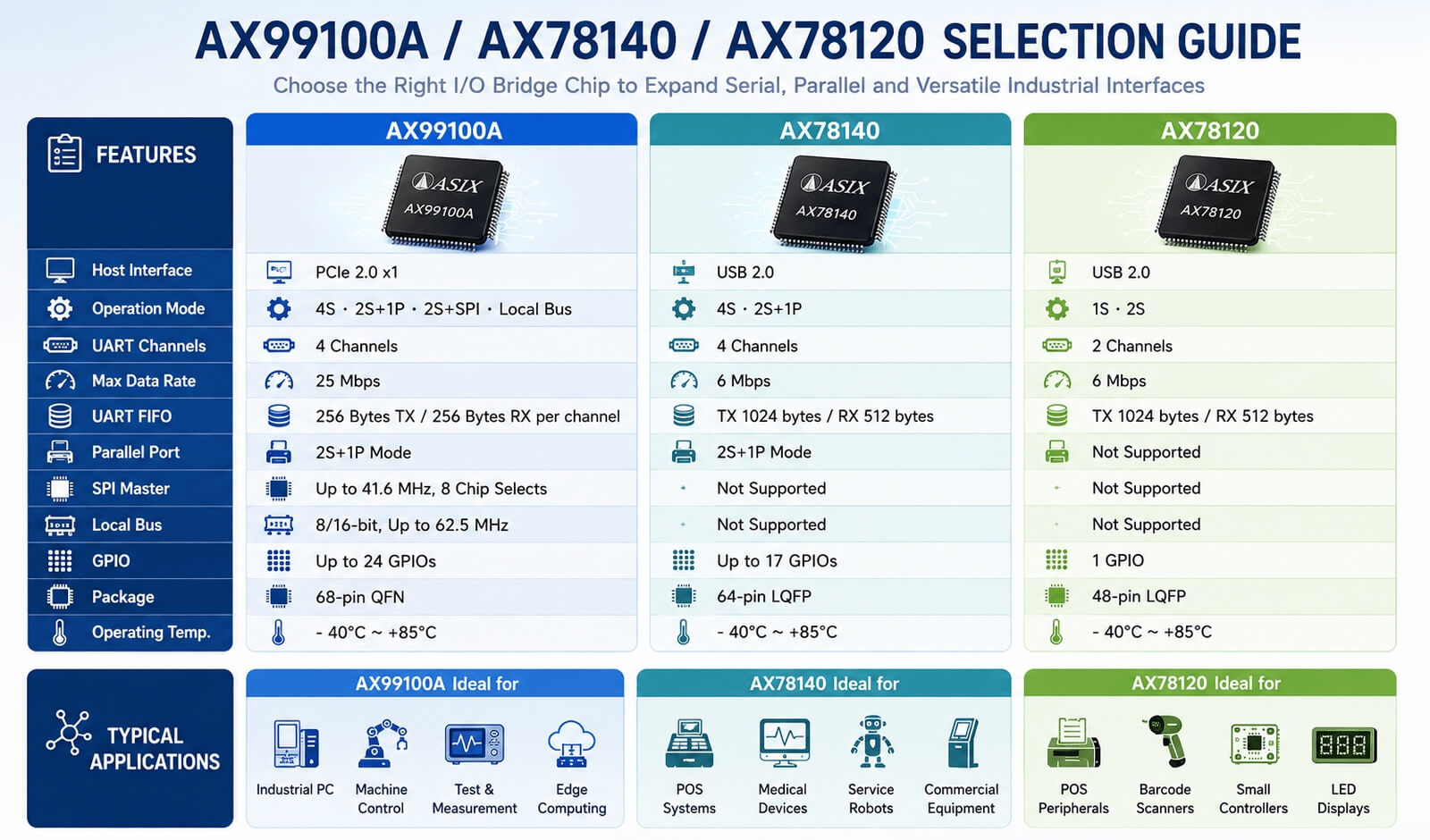
Figure-5. AX99100A/AX78140/AX78120 I/O Bridge Controller Selection Guide
For PCIe and USB 2.0 I/O expansion, device selection should be based on the host interface, required UART count, parallel port needs, and additional functions such as SPI, Local Bus, or GPIO. If the system provides a PCIe Root Port and requires multiple UARTs or additional interfaces such as SPI, Local Bus, or GPIO, the AX99100A is the preferred choice.
For USB 2.0 designs that need up to four UARTs or a mix of serial and parallel interfaces, the AX78140 is well suited. For compact applications requiring only one or two UARTs with lower cost and power consumption, the AX78120 offers a streamlined solution. Other considerations—such as operating system and driver support, board space, package type, operating temperature, physical layer interfaces, and long term reliability—should also be factored into system planning.
6. UART Transceivers: Connecting RS-232, RS-422, and RS-485 Networks
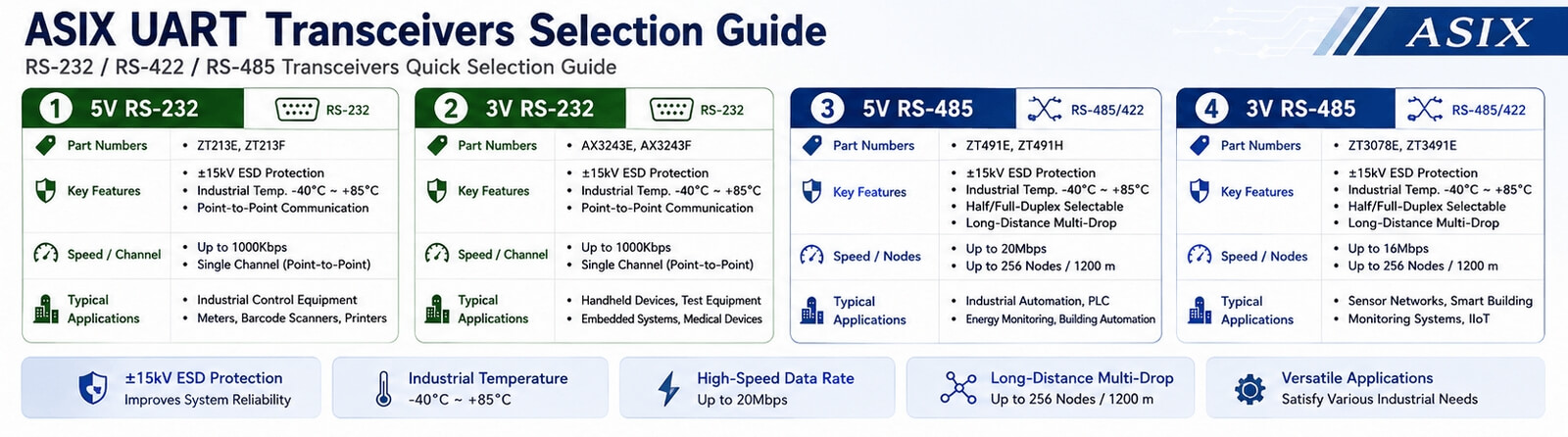
Figure-6. ASIX RS 232/RS 485 UART Transceiver Selection Guide
After PCIe or USB 2.0 is bridged to UART, external transceivers are required to match the physical interface of the connected devices. ASIX provides low power 3V/5V RS-232 and RS-422/RS-485 transceivers that convert UART logic signals into standard single ended or differential signals. RS-232 is best suited for short distance point to point links, while RS-422/RS-485 offers stronger noise immunity, longer transmission distances, and multi node networking for industrial environments.
(1) ASIX RS-232 UART Transceivers
RS-232 uses single ended signaling and remains widely adopted in barcode scanners, receipt printers, UPS systems, electronic scales, CNC controllers, and test instruments. RS-232 transceivers typically integrate charge pumps to generate the required positive and negative voltages from a single supply. For example, AX3243E and AX3243F provide multiple drivers/receivers, ESD protection, and AUTOGREEN power saving features. AX3243E supports data rates up to 250 Kbps, while AX3243F supports up to 1 Mbps. Key selection factors include supply voltage, channel count, data rate, ESD protection, package type, and power requirements.
(2) ASIX RS-485/RS-422 UART Transceivers
RS-422/RS-485 employs differential signaling, making it well suited for longer distances, noisy environments, and multi node networks. RS-422 is commonly used for full duplex point to multipoint links, while RS-485 supports half or full duplex communication and is widely applied in Modbus RTU, building automation, energy management, and industrial control. ASIX offers 3V/5V RS-485 transceivers with various data rates, duplex modes, unit loads, packages, and ESD protection levels. For example, ZT491E and ZT491H are 5V full duplex RS-485 transceivers supporting data rates up to 10 Mbps and ±15 kV HBM ESD protection. ZT491E uses a 1 unit load design supporting up to 32 nodes, while ZT491H uses a 1/8 unit load design supporting up to 256 nodes in theory. For reliable industrial communication, designers should also evaluate transmission distance, node count, termination, biasing, isolation, grounding, surge protection, and PCB layout.
ASIX UART Transceiver Selection Considerations
When choosing a UART transceiver, designers should evaluate factors such as host logic voltage, system power architecture, interface type (RS-232/RS-422/RS-485), duplex mode, data rate, driver/receiver count, ESD and surge protection, unit load, operating temperature, package size, and power consumption. For long distance, multi node, or noisy industrial environments, careful attention should also be given to termination, biasing, grounding, and isolation to ensure reliable communication.
7. PCIe/USB Serial and Parallel Communication Card Design Considerations
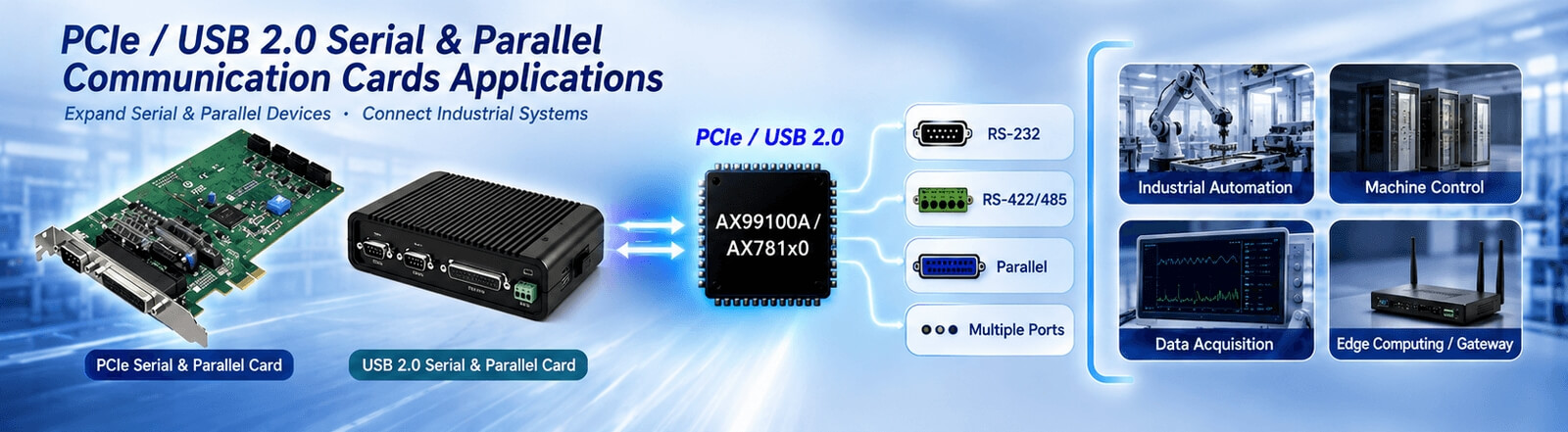
Figure-7. ASIX PCIe/USB Serial and Parallel Communication Card Solutions
PCIe and USB serial/parallel communication cards are common applications of I/O bridge controllers, adding COM and LPT ports to modern computers so they can continue connecting to PLCs, CNC systems, drives, barcode scanners, electronic scales, POS devices, test instruments, printers, and other legacy equipment.
For internal expansion, the AX99100A is well suited for PCIe communication cards. Its 4S mode supports four UART ports, while 2S+1P mode provides two UARTs plus one parallel port. For external USB 2.0 designs, the AX78140 supports multi port serial or serial/parallel expansion, while the AX78120 is ideal for compact applications requiring only one or two UARTs.
The I/O bridge controller manages PCIe/USB-to-UART or parallel-port conversion, while external RS-232, RS-422, or RS-485 transceivers are required for physical-layer connectivity. For a complete and consistent interface solution, these bridge controllers can be paired with ASIX RS-232/RS-485 UART transceivers, selected according to operating voltage, data rate, duplex mode, ESD protection, unit load, and package requirements. This provides an integrated path from the host interface and I/O bridge controller to the external physical communication layer.
Product validation should include baud rate testing, data format compatibility, flow control, simultaneous multi port traffic, hot plugging, reconnection, driver support, and long term reliability to ensure stable operation across diverse host platforms and industrial environments.
8. PCIe/USB Data Acquisition (DAQ) Design Considerations
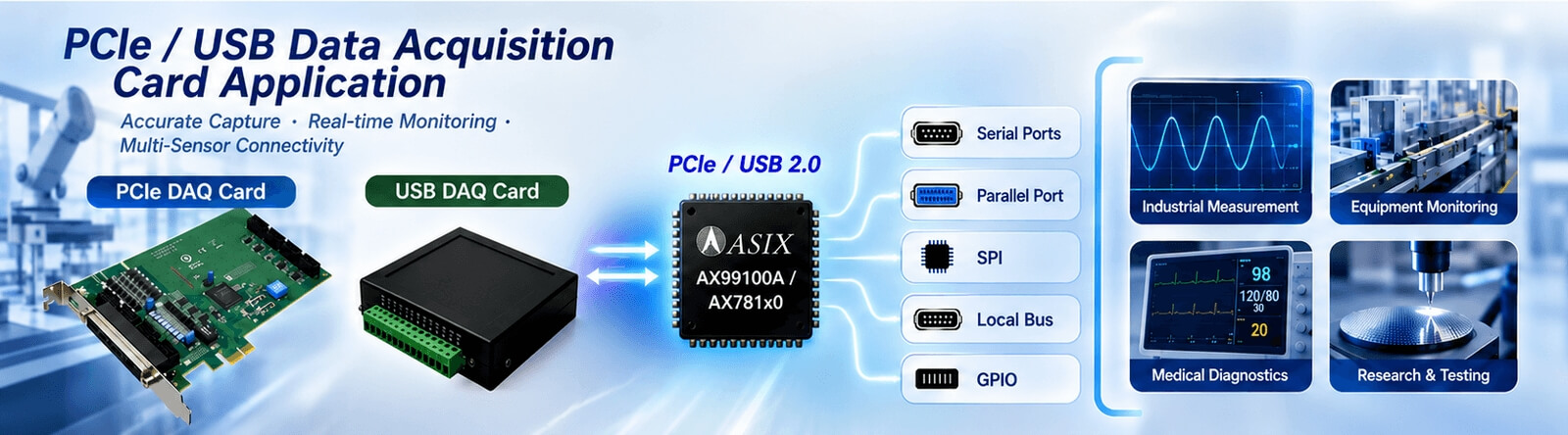
Figure-8. ASIX PCIe/USB Data Acquisition Applications
PCIe and USB data acquisition (DAQ) cards are widely used in industrial measurement, automated testing, equipment monitoring, energy management, laboratory instruments, and smart manufacturing. Typical measurements include temperature, pressure, vibration, flow, voltage, and current, while trigger functions, digital I/O, and device control can also be integrated.
A DAQ system should clearly separate the measurement front end from the host interface. ADCs, AFEs, sensors, MCUs, or FPGAs handle signal conditioning, sampling, synchronization, and preprocessing, while the AX99100A, AX78140, and AX78120 provide the data path to the PCIe or USB host rather than replacing the ADC itself. For PCIe DAQ designs, the AX99100A can use SPI, Local Bus, and GPIO to connect ADCs, MCUs, FPGAs, trigger logic, and digital I/O. For USB 2.0 designs, the AX78140 or AX78120 can be selected based on channel count and system requirements, making them suitable for external DAQ modules, data loggers, and field test equipment.
DAQ hardware design should also consider analog/digital partitioning, reference voltage, power noise, grounding, clock quality, anti aliasing filters, input protection, and isolation. Validation should cover resolution, sampling rate, sustained throughput, multi channel synchronization, data loss, host loading, and long term recording reliability.
9. Industrial PCs (IPC) and Edge AI Design Considerations
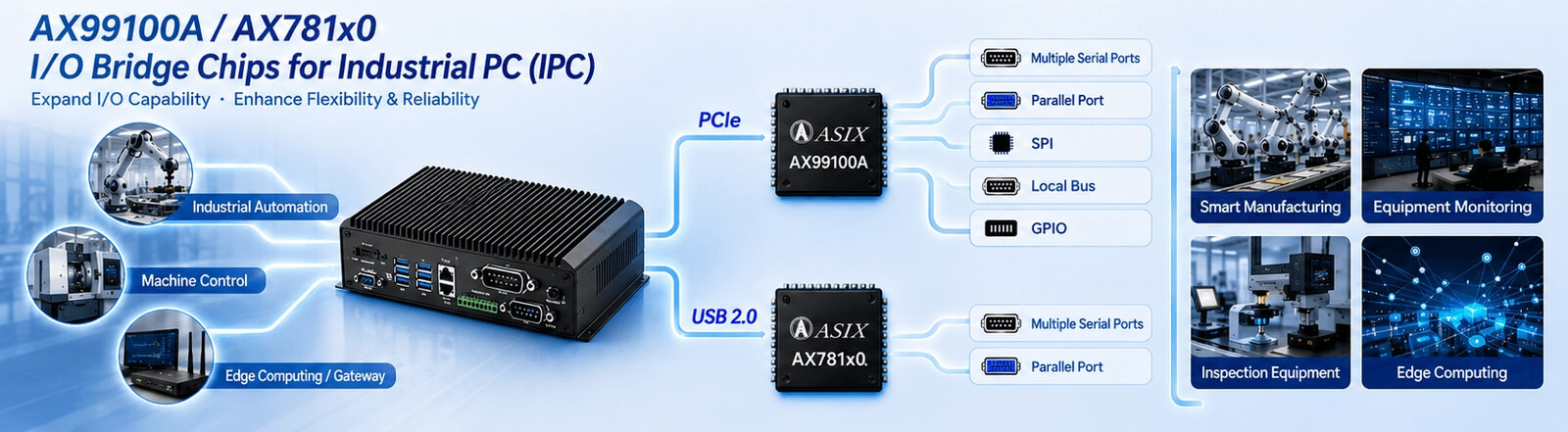
Figure-9. ASIX PCIe/USB 2.0 I/O Bridging Solutions for Industrial PCs and Edge AI Systems
Industrial PCs and edge AI systems are widely deployed in smart manufacturing, machine control, equipment monitoring, automated testing, energy management, machine vision, and transportation. These platforms often need to connect with PLCs, CNC systems, drives, BMS, smart meters, sensors, and test instruments, making I/O expandability, long term reliability, and legacy device compatibility critical design requirements.
Although modern IPCs and edge AI platforms such as NVIDIA Jetson deliver powerful CPU/GPU/NPU processing, native UART and industrial I/O resources may still be limited. If a PCIe Root Port is available, the AX99100A can expand UART, parallel, SPI, Local Bus, and GPIO interfaces to connect PLCs, MCUs, sensor hubs, FPGAs, and other peripherals. If PCIe lanes are already allocated to NVMe storage, high speed networking, or other modules, the AX78140 or AX78120 can provide external or modular serial I/O expansion via USB 2.0.
In edge AI applications, I/O bridge controllers extend AI outputs to field devices. For example, a machine vision system can notify a PLC through RS-232/RS-485 when a defect is detected, while predictive maintenance systems can read equipment status or issue commands over Modbus RTU. In this role, the AX99100A, AX78140, and AX78120 act as communication links between the AI host and physical equipment, rather than replacing the GPU, NPU, or PLC.
System integration should also verify PCIe lane availability, USB Host Mode, operating system and driver compatibility, as well as isolation, ESD, EFT, surge, and grounding requirements. Validation should include multi port traffic handling, reconnection, wide temperature operation, and long term full load testing to ensure reliable performance across industrial environments.
10. POS and Commercial Terminal Design Considerations
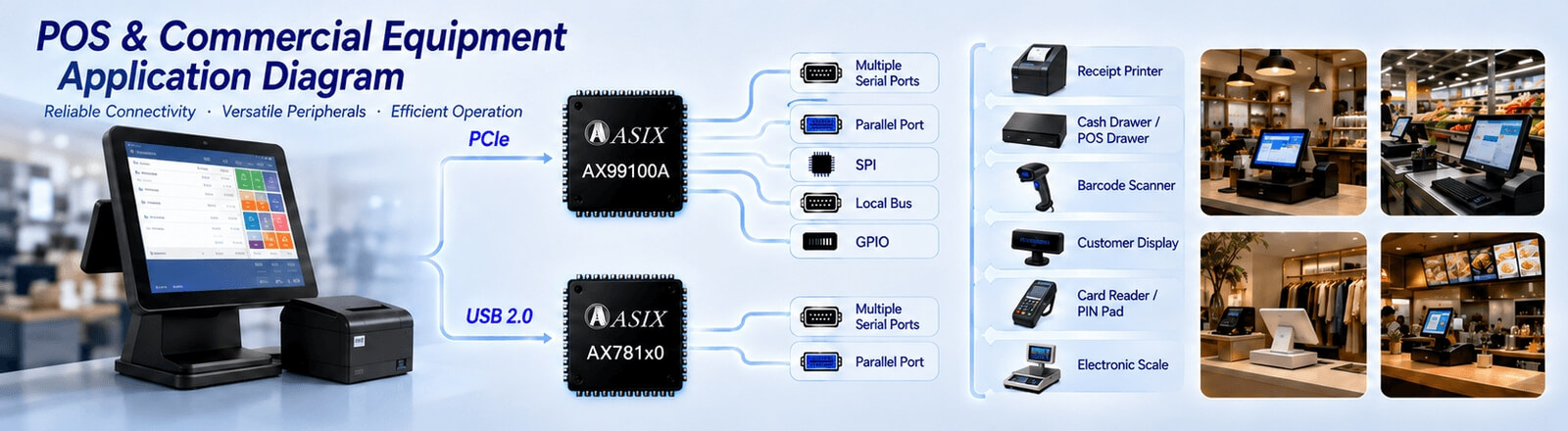
Figure-10. ASIX PCIe/USB I/O Bridging Solutions for POS and Commercial Terminals
POS systems and commercial terminals are widely deployed in retail, restaurants, supermarkets, self checkout, ticketing, healthcare registration, and logistics. In addition to transaction processing, these platforms often connect to barcode scanners, electronic scales, receipt printers, customer displays, cash drawers, card readers, and label printers. While modern POS platforms increasingly adopt USB, Ethernet, and touch interfaces, many legacy peripherals still rely on RS-232 or parallel ports, making compatibility and ease of maintenance critical design factors.
For onboard designs, the AX99100A can expand multiple UARTs or provide a mixed serial/parallel interface through its 2S+1P mode. For external I/O boxes or systems without available PCIe, the AX78140 or AX78120 can deliver USB 2.0 expansion. External connections still require appropriate RS-232/RS-485 transceivers, connectors, and protection circuitry.
Product validation should include hot plugging, suspend/resume, USB reconnection, COM port assignment retention, simultaneous peripheral operation, and driver compatibility to ensure reliable performance in commercial environments.
11. Smart Collaborative Robot Design Considerations

Figure-11. ASIX PCIe/USB I/O Bridging Solutions for Smart Collaborative Robot Applications
Humanoid and service robots are increasingly deployed in reception, logistics, healthcare, factory collaboration, and inspection. These systems typically adopt a layered control architecture: the central AI platform manages vision, speech, perception, and motion planning, while real time controllers, distributed MCUs, DSPs, or motor controllers handle joint servo control, sensor processing, and safety functions. High speed PWM, current loops, and motor control should remain local to the actuators, while the central AI host uses Ethernet, CAN FD, UART, or SPI for high level control, monitoring, and device management.
As robot degrees of freedom and sensor counts increase, the AI platform may require additional interfaces for safety MCUs, BMS, sensor hubs, diagnostics, and distributed control nodes. If a PCIe Root Port is available, the AX99100A can expand UART, SPI, and GPIO resources when native interfaces are insufficient.
For example, in a dexterous hand design, the AI host can connect to the AX99100A via PCIe, then use its SPI Master interface to link an external CAN FD Controller and CAN FD Transceiver. This creates an additional CAN FD bus for hand MCUs, motor drivers, and sensor nodes, reducing wiring complexity, lowering host I/O demands, and improving scalability and fault isolation. In this architecture, the AX99100A provides the PCIe to SPI bridge, the external CAN FD Controller manages protocol, arbitration, and error handling, and the CAN FD Transceiver supplies the physical layer interface. The AX99100A does not replace the CAN FD Controller or perform high speed motor control.
Validation should emphasize SPI throughput, interrupt latency, CAN FD bus load, multi node update rates, error recovery, and fault handling. Low latency motor current loops, PWM, and servo control should continue to be managed locally by MCUs, DSPs, or dedicated motor controllers.
12. Conclusion
As AI, edge computing, smart manufacturing, and industrial automation continue to advance, modern platforms are gaining increasingly powerful processing capabilities and high speed interfaces. Yet mature interfaces such as RS-232, RS-422, RS-485, UART, and parallel ports remain widely used in PLCs, test instruments, controllers, POS peripherals, and industrial equipment. Ensuring reliable connectivity with these legacy devices therefore remains a critical system design requirement.
ASIX AX99100A, AX78140 and AX78120 provide flexible PCIe and USB 2.0 I/O expansion, supporting multiple UARTs, parallel ports, SPI, and Local Bus interfaces. When combined with ASIX RS-232/RS-485 UART transceivers, they deliver a complete connectivity solution from the host interface to the physical communication layer. These solutions are well suited for applications such as serial/parallel communication cards, DAQ systems, industrial PCs, POS platforms, edge AI systems, and humanoid robotics.
Successful product design also requires careful attention to transmission distance, interface and node count, isolation and protection, PCB layout, power quality, driver support, and long term reliability. Overall, PCIe/USB I/O bridge controllers serve as a vital link between modern AI platforms and legacy industrial equipment, helping preserve existing investments while enabling scalable, reliable next generation designs.
===
FAQ
Q: What is a PCIe/USB I/O bridge controller?
A: A PCIe/USB I/O bridge controller expands a host PCIe or USB interface into UART, parallel port (LPT), SPI, Local Bus, or GPIO interfaces. It enables modern PCs, industrial computers, edge AI systems, and control platforms to connect with legacy devices while improving compatibility and scalability.
Q: What are the differences between AX99100A, AX78140, and AX78120?
A: The AX99100A is a PCIe multifunction I/O bridge supporting up to four UARTs, a parallel port, SPI, Local Bus, and GPIO. The AX78140 uses USB 2.0 and supports either four UARTs or two UARTs plus one parallel port. The AX78120 is designed for compact single or dual UART applications. Selection depends on the host interface and required I/O functions.
Q: What applications are suitable for AX99100A?
A: The AX99100A is ideal for PCIe serial/parallel cards, DAQ systems, industrial PCs, automation equipment, test instruments, POS systems, edge AI platforms, and robotics. Its 4S, 2S+1P, 2S+SPI, and Local Bus modes provide flexible expansion options for diverse system requirements.
Q: How should AX78140 and AX78120 be selected for USB 2.0 applications?
A: Choose the AX78140 when up to four UARTs or a combination of two UARTs and one parallel port is required. Choose the AX78120 for compact applications needing only one or two UARTs. Both are suitable for USB serial adapters, external I/O modules, DAQ systems, IPCs, POS terminals, test equipment, and maintenance interfaces.
Q: Does ASIX offer a USB 2.0 to Single port Serial (UART) chip solution?
A: Yes. The AX78120 is well suited for USB 2.0 to single port serial/UART/RS-232 converter applications.
Q: Can AX99100A, AX78140, or AX78120 connect directly to RS-232/RS-422/RS-485 devices?
A: No. These I/O bridge controllers output UART logic signals, typically at CMOS/TTL levels. External RS-232/RS-422/RS-485 transceivers—such as ASIX RS-232/RS-485 UART transceivers—are required to provide the proper physical layer voltage or differential signaling.
Q: What UART transceiver solutions does ASIX offer, and what should be considered when selecting one?
A: ASIX offers 3V/5V RS-232 and RS-485 UART transceivers with various data rates, duplex modes, ESD protection levels, unit loads, and package options. Key selection factors include interface type, supply voltage, transmission distance, node count, speed, power consumption, and operating environment. For long distance or noisy industrial networks, termination, biasing, grounding, and isolation are especially important.
Q: How can AX99100A, AX78140, and AX78120 be used with modern PCs, industrial PCs, or NVIDIA Jetson edge AI platforms?
A: If a PCIe Root Port is available, the AX99100A can expand UART, SPI, Local Bus, and GPIO interfaces for PLCs, BMS, MCUs, sensor hubs, and other industrial devices. If PCIe resources are already allocated to NVMe, high speed networking, or other modules, the AX78140 or AX78120 can provide serial I/O expansion via USB 2.0.
Q: How can AX99100A be used in humanoid robots, dexterous hands, or CAN FD expansion?
A: The AX99100A does not include a CAN FD controller, but in 2S+SPI mode it can connect to an external CAN FD controller via SPI, followed by a CAN FD transceiver to create an additional CAN FD bus. This architecture is suitable for dexterous hands, arm controllers, sensor nodes, BMS, and safety MCUs, while high speed motor control remains handled locally by MCUs, DSPs, or dedicated motor controllers.
- 01
Interface
ASIX IO-Link master/device software stacks and PCIe & USB to UART/serial/parallel I/O bridge chips solutions
- 02
AX78140
USB 2.0 to Multi I/O (4S, 2S+1P) Controller
- 03
AX78120
USB 2.0 to Multi I/O (1S or 2S) Controller
- 04
AX3243E
Low Power 3V to 5.5V 3D/5R 250Kbps RS-232 Transceiver
- 05
AX3243F
Low Power 3V to 5.5V 3D/5R 1000Kbps RS-232 Transceiver
- 06
AX99100A
PCIe to Multi I/O (4S, 2S+1P, 2S+SPI, LB) Controller