Governance
Governance Structure
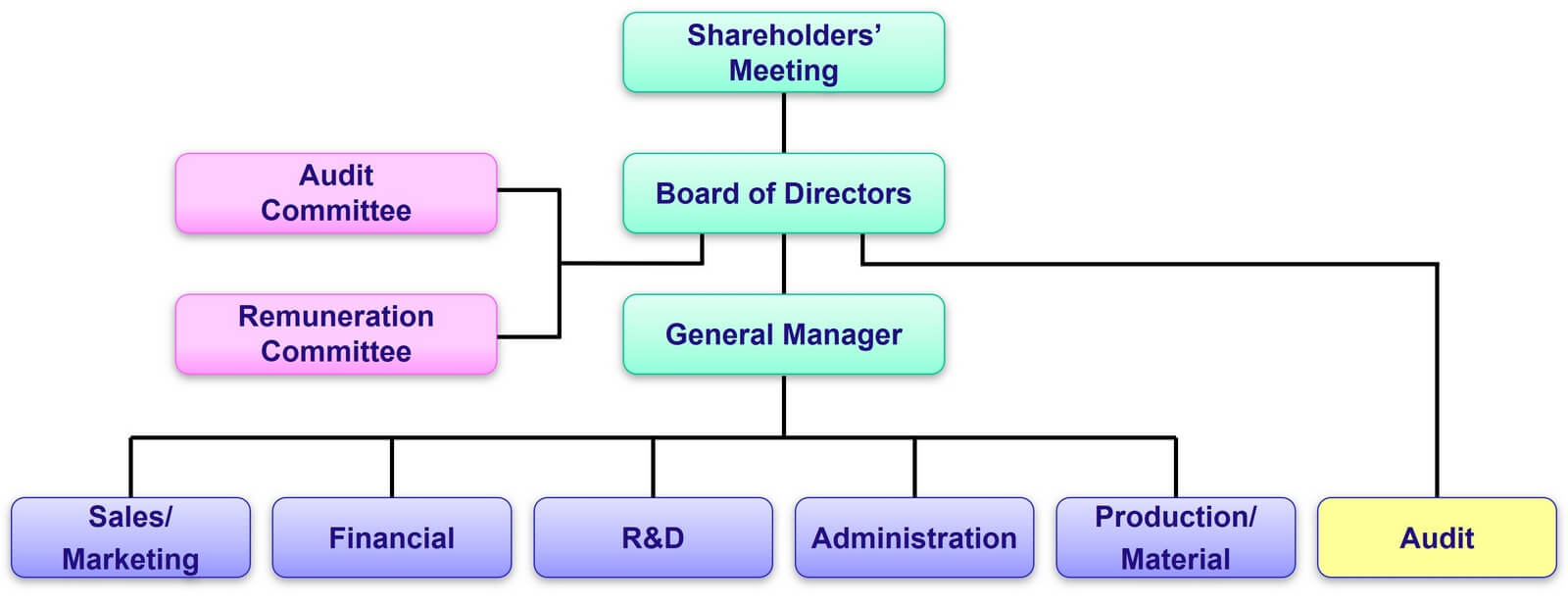
ASIX has established a comprehensive corporate governance aligned with regulations and investor expectations. The Board of Directors serves as the highest governance body, supported by the Audit and Remuneration Committees, oversees long-term corporate strategy, financial performance, and sustainability goals. The General Manager directs company operations and guides all departments to ensure effective execution and risk management.
Board Diversity and Independence
Board Diversity
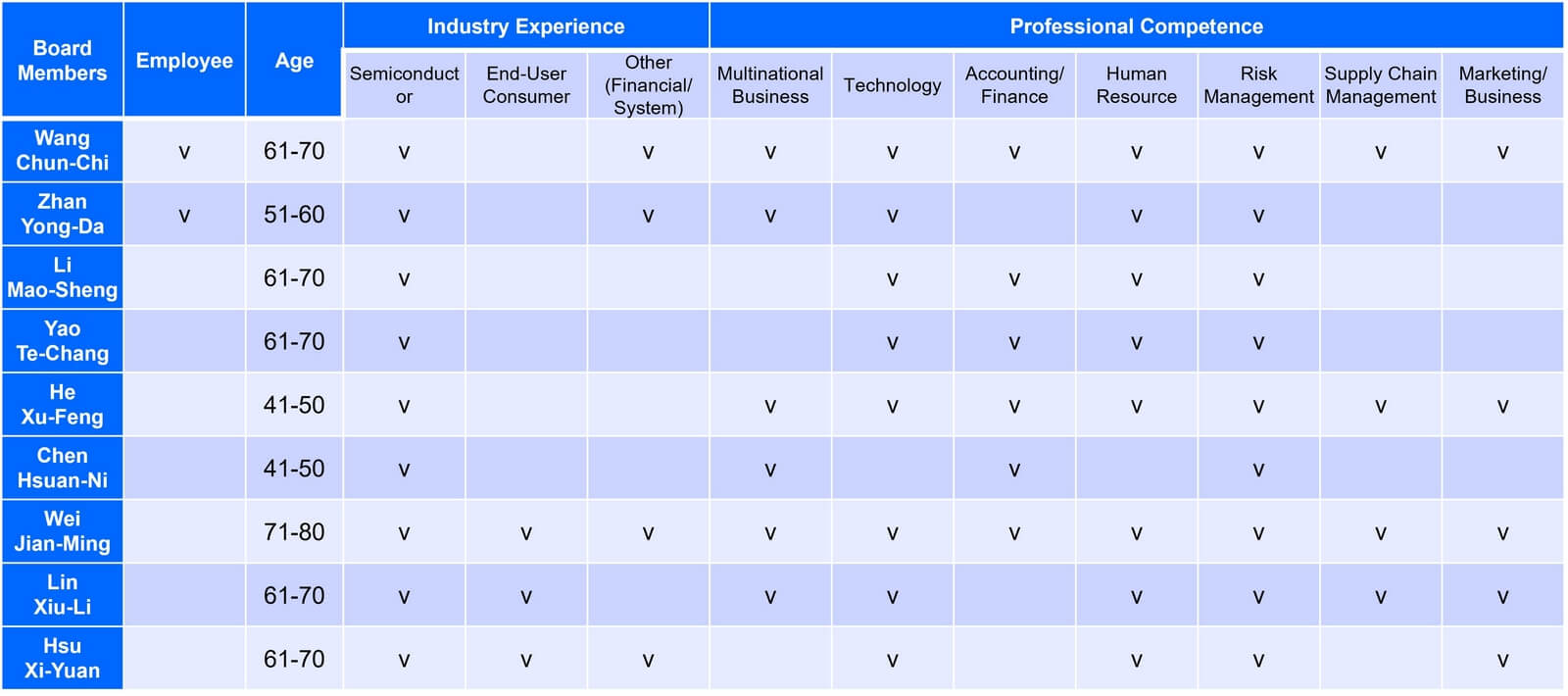
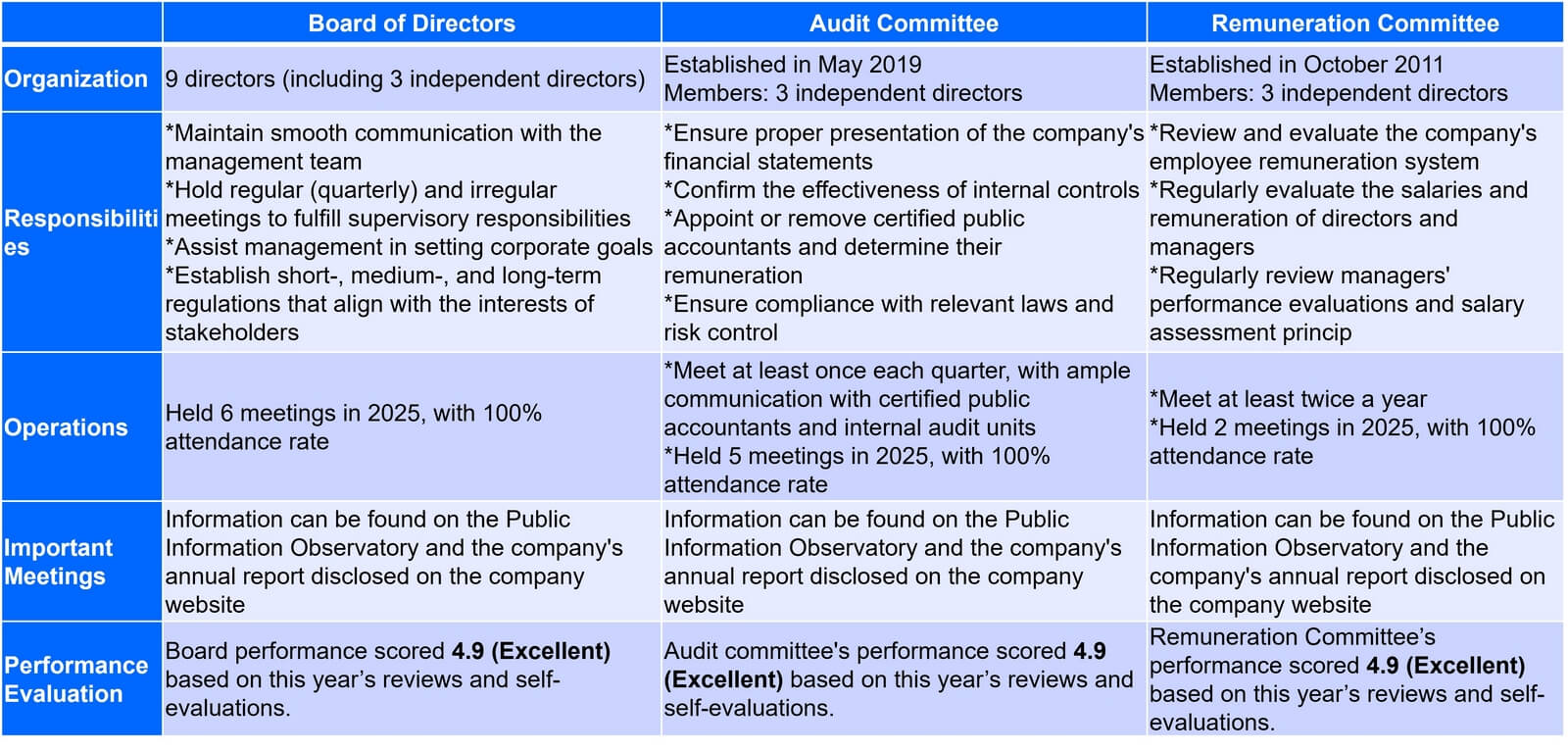
ASIX’s Board of Directors consists of nine members, including at least three independent directors, elected for three-year terms through a candidate nomination system at the shareholders’ meeting. Independent director qualifications, shareholding requirements, and election procedures follow the Company Act and Securities and Exchange Act. Board members possess the expertise needed to perform their duties and, through regular and ad hoc meetings, oversee major issues and provide effective governance.
The Board values diversity in its composition, without restrictions on gender, age, ethnicity, or nationality, while ensuring members possess the knowledge, skills, and expertise needed for sound governance. Collectively, the Board demonstrates capabilities in business judgment, finance, management, crisis response, industry insight, global perspective, leadership, decision-making, and risk management.
ASIX’s Board consists of nine members, including three independent directors (33%) and two employee directors (22%). Given the male-dominated nature of the technology industry and the need to balance overall competencies, female representation has not yet reached one-third; however, increasing female directors to one-third remains a future goal. As of the end of 2025, three directors were under 60, four between 61–70, and two between 71–80. The Board currently includes one female director, and all independent directors meet FSC regulatory requirements.
Board Independence
ASIX’s Board of Directors consists of nine members, including three independent directors (33%). None of the independent directors hold company shares, and all meet the requirements set by the FSC Securities and Futures Bureau. Furthermore, no director falls under the circumstances outlined in Article 26-3, Paragraphs 3 and 4 of the Securities and Exchange Act, demonstrating the Board’s strong independence.
Governance Structure of the Board of Directors
Business Performance
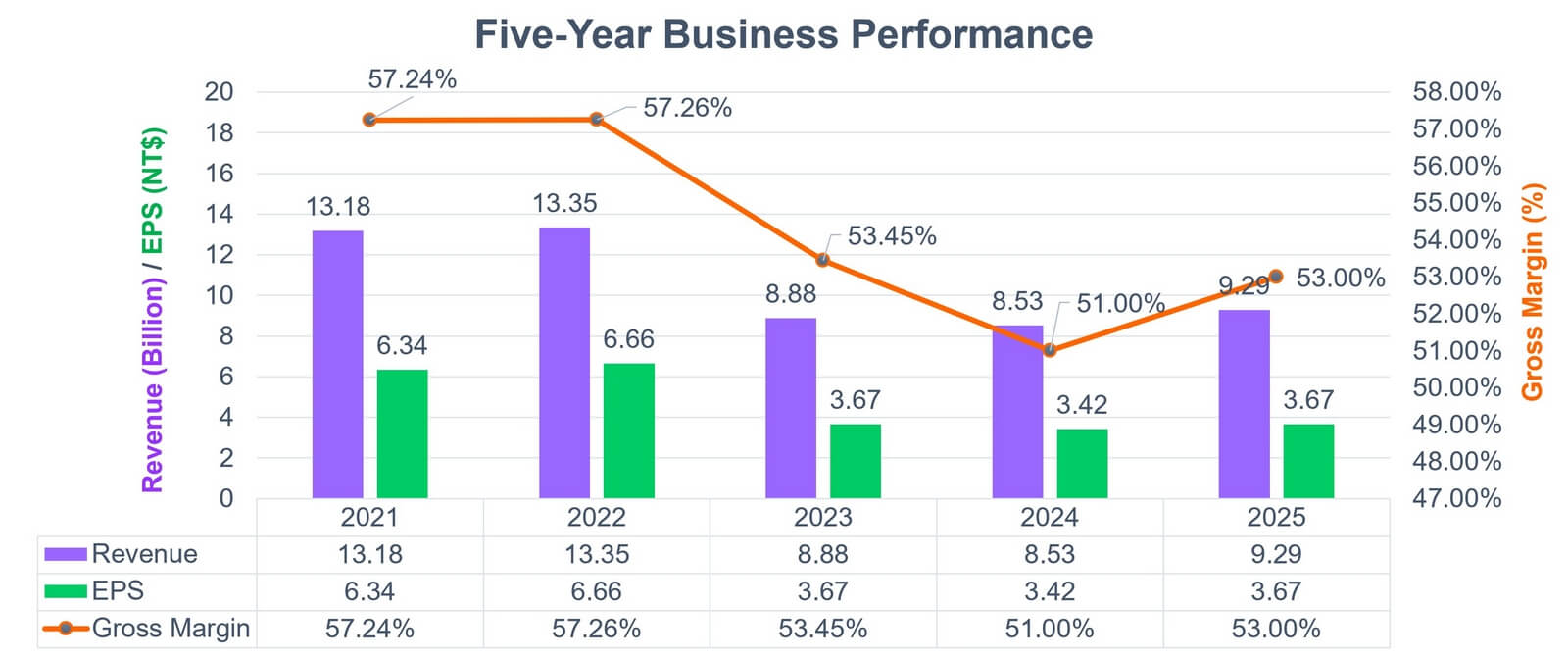
ASIX is committed to designing value-driven, innovative, highly integrated, and cost-effective chip solutions. The Company focuses on niche blue ocean markets in industrial, embedded, and USB Ethernet chips, delivering 26 consecutive years of profitability while actively investing in R&D and creating employment opportunities.
Dividend Policy
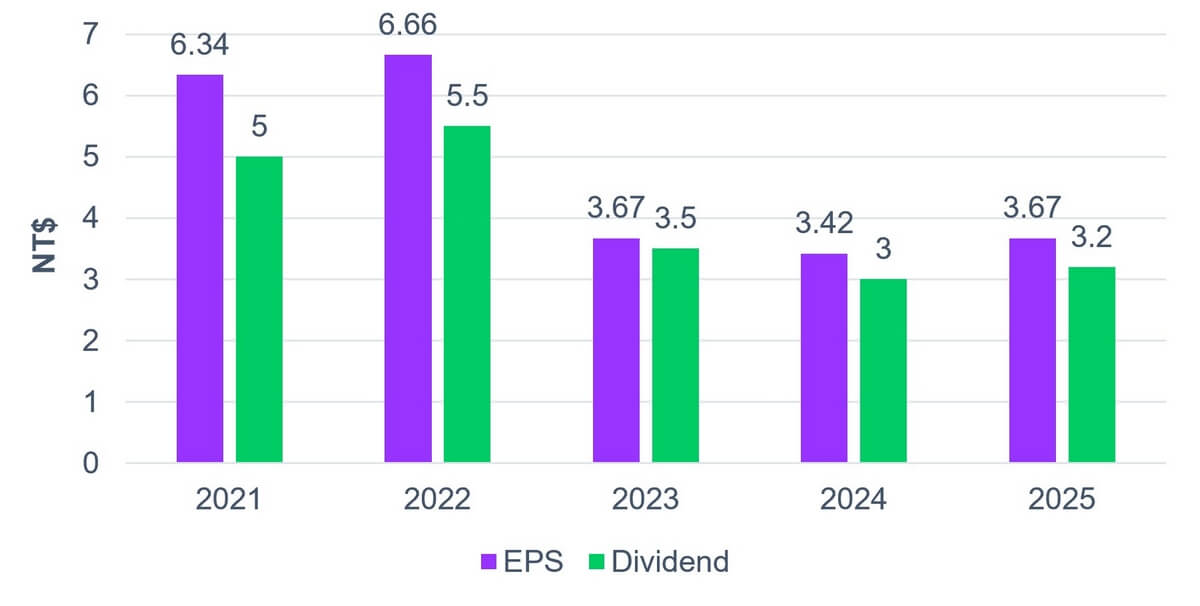
ASIX’s dividend policy, as stipulated in the Articles of Incorporation, is determined based on capital structure, financial performance, operating conditions, and industry characteristics, following a prudent distribution principle. Dividends shall not be less than 30% of annual after-tax earnings, with at least 10% distributed in cash. Profits are allocated after tax payments, loss compensation, and a 10% legal reserve (unless the reserve has reached paid-in capital). Special reserves may be set aside or reversed as required by operations and regulations, with the remaining earnings proposed by the Board for shareholder approval.
On February 23, 2026, the Audit Committee reviewed and submitted the 2025 earnings distribution proposal to the Board of Directors, which was subsequently approved and presented to the Annual General Meeting for ratification. The proposal includes a cash dividend of NT$3.2 per share.
Integrity and Legal Compliance
Integrity Management Policy
The Company upholds the principle of integrity and has established the Code of Integrity Management and the Code of Ethical Conduct, which are fully implemented in the decision-making processes of the Board of Directors and senior management. Board members recuse themselves and abstain from voting on matters involving their own interests, demonstrating a strong commitment to integrity in governance.
In accordance with regulations issued by the competent authorities, including the Guidelines for the Appointment or Dismissal of Insiders and the Procedures for Preventing Insider Trading, the Company actively promotes awareness among insiders regarding the prohibition of trading securities based on non-public information. In addition to conducting regular legal education and training, the Company also participates in promotional activities organized by regulators to strengthen compliance awareness and reinforce self-discipline.
The Company has established a sound accounting system and internal control mechanisms, which are regularly audited by the internal audit unit and reported to the Board of Directors.
Furthermore, the Company evaluates the integrity records of counterparties and, where appropriate, incorporates integrity clauses into contracts to strengthen ethical standards in business relationships. Integrity management is regarded as the foundation of directors’ and managers’ duties. The Company regularly communicates and promotes related concepts, at least once annually, to ensure continuous reinforcement of integrity principles.
Implementation of Integrity Management
The Company actively enforces integrity management, with specific measures as follows:
- The Company adopts a professional management system, with the management team responsible for daily operations and reporting regularly to the Board of Directors, with complete meeting records maintained. At least once a year (e.g., December 15, 2025), the internal audit unit reports on the implementation of integrity management to the Board. Quarterly training sessions are conducted to educate employees and new hires on ethical conduct, intellectual property management, insider trading prevention, personal data protection, and trade secret safeguards. Internal control audits confirm effective risk management, with no significant irregularities identified. No litigation related to anti-competitive practices has occurred.
- The Company places strong emphasis on customer privacy protection. In compliance with the Personal Data Protection Act, employees are trained on data protection and confidentiality principles. A data governance framework has been established, including standards, classification, access controls, and owner review mechanisms to ensure data availability, integrity, and confidentiality. This system applies to all subsidiaries, branches, customers, and suppliers. Personal data collection, processing, and use are conducted strictly in accordance with government regulations, with no disclosure, rental, or transfer to third parties. Annual internal audits confirm effective controls with no major risks identified.
- The Company complies with the Company Act, Securities and Exchange Act, Business Accounting Act, Political Donations Act, Anti-Bribery Act, Government Procurement Act, and the Act on Recusal of Public Servants Due to Conflicts of Interest. Due diligence is conducted prior to transactions with upstream and downstream partners to mitigate risks. A whistleblowing hotline is available for stakeholders to report conflicts of interest. Relevant information is disclosed on the Company’s website and in annual reports published on the Market Observation Post System.
- In line with applicable codes and standards, the Company regularly reviews and implements preventive measures to reduce risks associated with bribery, improper donations or sponsorships, acceptance of unreasonable gifts or hospitality, infringement of trade secrets or intellectual property rights, and unfair competition. To date, no violations of integrity management have been reported.
- The Company has established a comprehensive internal control mechanism and provides spokesperson and supervisor mailboxes on its official website for stakeholders to submit complaints. An anonymous reporting channel (supervisor mailbox) is also available to protect whistleblowers from adverse treatment or retaliation. In 2025, no complaints were received, demonstrating the effective operation of the Company’s internal control and integrity governance mechanisms.
Risk Management
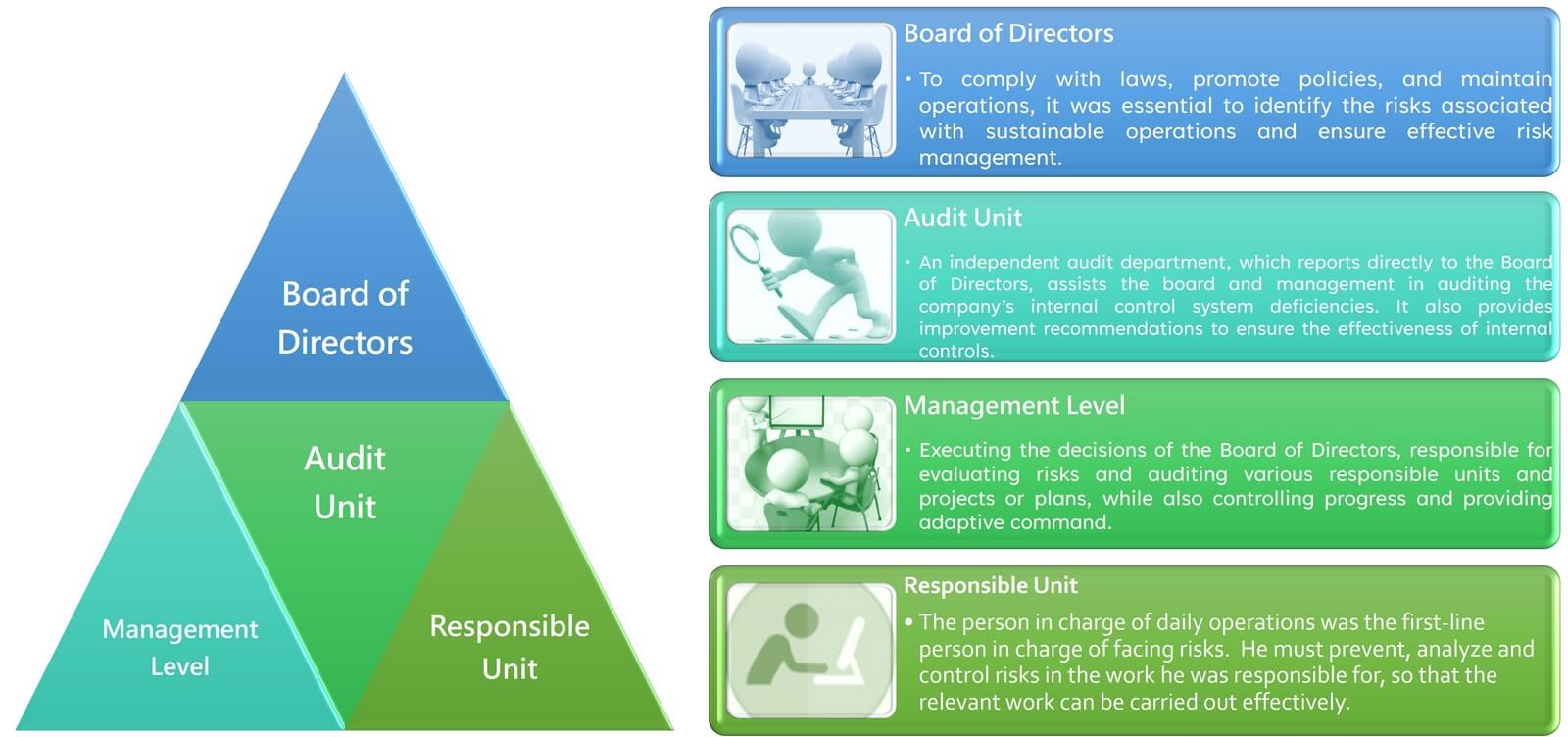
The company must address both internal and external opportunities and risks. Through systematic risk management, we mitigate the impact of major events, ensure sustainable operations, and safeguard stakeholder interests.
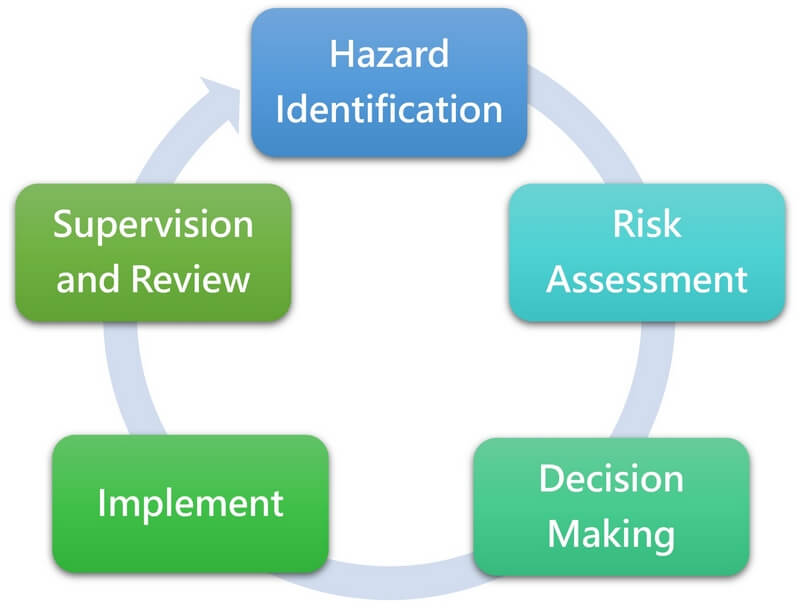
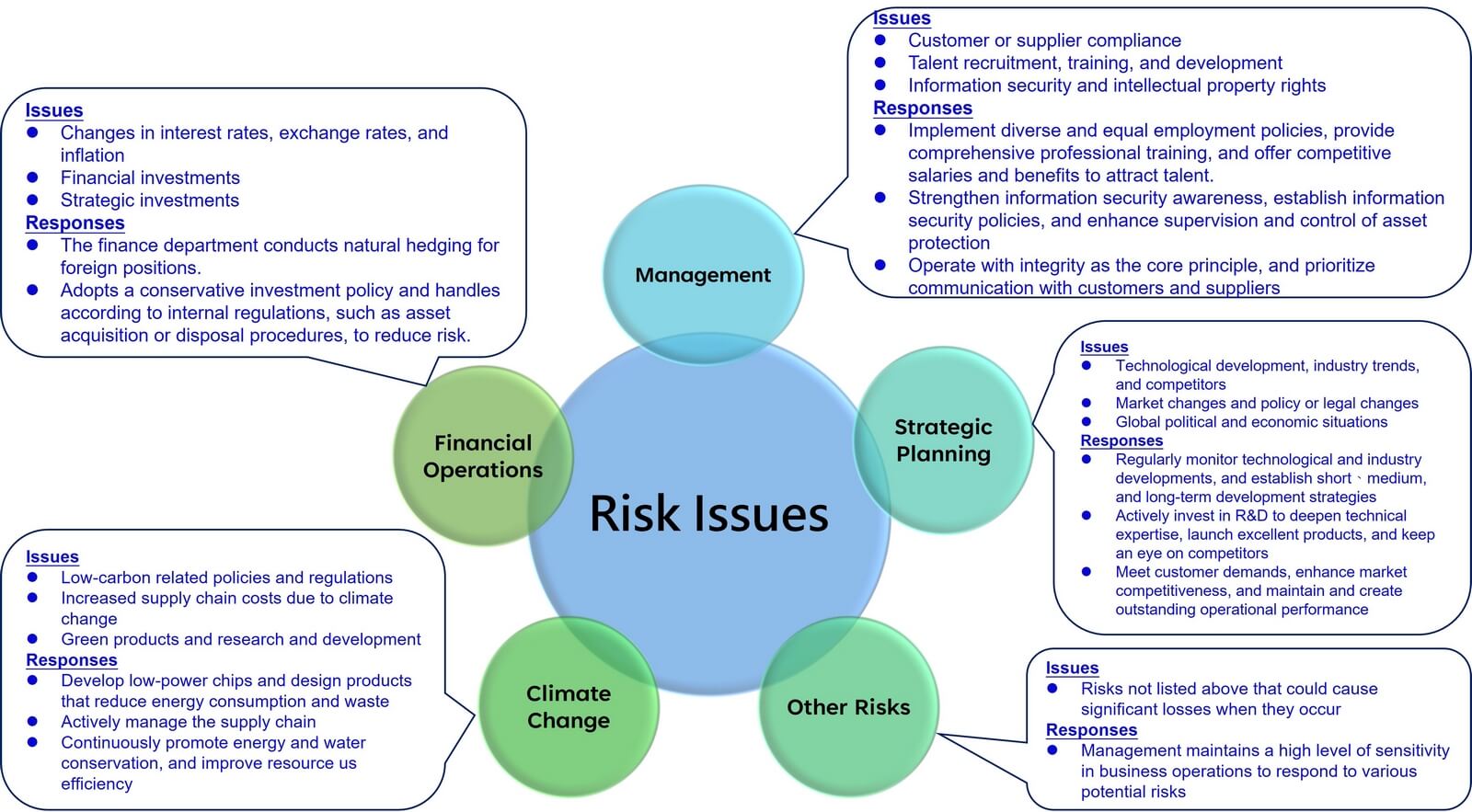
We adopt a five‑step process — hazard identification, risk assessment, decision making, implement, supervision and review — to comprehensively manage risks related to operations, strategic planning, financial management, and climate change, ensuring effective response during emergencies while protecting employee safety and shareholder rights.
The company has not yet introduced internal carbon pricing. As a fabless IC design firm with limited scale and no energy‑intensive processes, climate change is considered a medium‑to‑low financial and business risk. Referencing Taiwan’s carbon fee standards and global pricing trends, we set a 2025 shadow carbon price of NT$300 per ton CO₂e, applied to office equipment procurement to reflect long‑term emission risks. Going forward, we will continue to assess the feasibility of internal carbon pricing to better quantify climate‑related impacts on costs, investments, and financial reporting, and to integrate them into overall risk management.
Risk Issues and Responses
Risk Management Organization and Responsibilities
Information Security Policy and Management
Information Security Policy and Organization
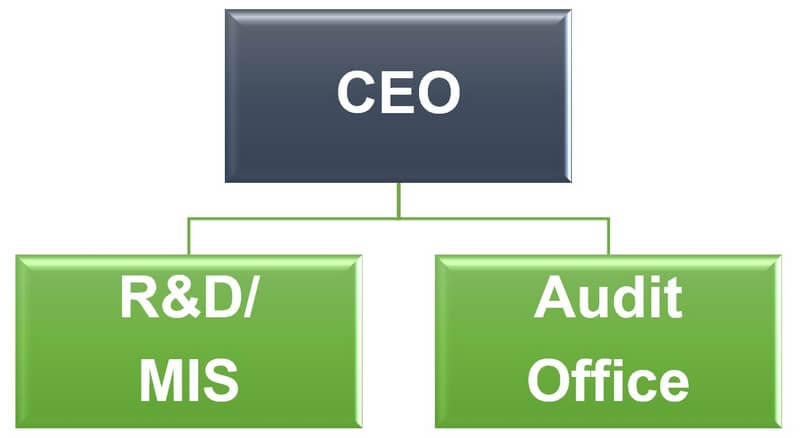
To ensure the company’s sustained growth and uphold the core value of sustainable operations, ASIX has established a clearly defined information security policy and an information security management organization, specifying related responsibilities and operational procedures. By strengthening all employees’ awareness of information security and implementing effective management of security equipment and environments, ASIX ensures the confidentiality, integrity, and availability of its information assets. These measures effectively reduce information security risks and protect operational stability and corporate reputation.
Information Security Management
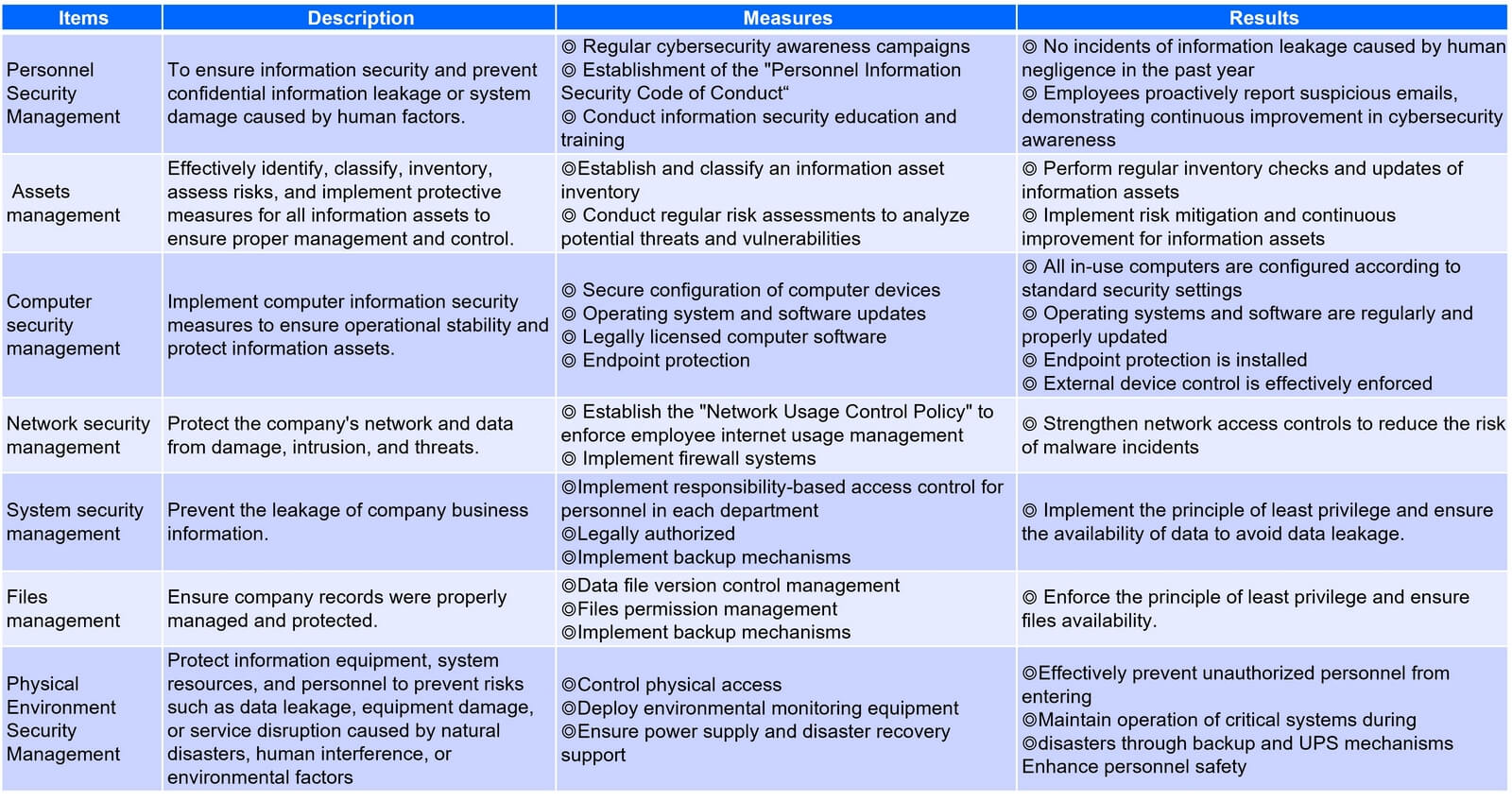
ASIX is committed to strengthening information security governance by adhering to standards and investing in system upgrades to safeguard data and manage risks effectively. The Company applies the PDCA cycle, conducting annual risk assessments and audits, with results reviewed in Information Security Management Meetings. Preventive and corrective measures are implemented as needed, supported by ad hoc reviews to keep the ISMS adaptive. Through ongoing audits and improvements, the Company ensures its information security framework remains effective, transparent, and continuously optimized.
Information Security Measures
- International Certification: In 2025, ASIX obtained ISO/IEC 27001 certification, establishing a structured management system to strengthen asset management, risk control, and continuous improvement.
- Technical Protection: The Company implemented Akamai security services, including DDoS protection and a Web Application Firewall (WAF), enhancing the availability and security of its website and external systems while reducing cyberattack risks.
Information Security Incident Handling and Reporting
The Company has established procedures for information security incident response and reporting, with dedicated personnel responsible for managing major events. In 2025, no significant incidents occurred, and there were no impacts on finance or operations.
Information Security Measures and Results
White Papers